Upon the River O
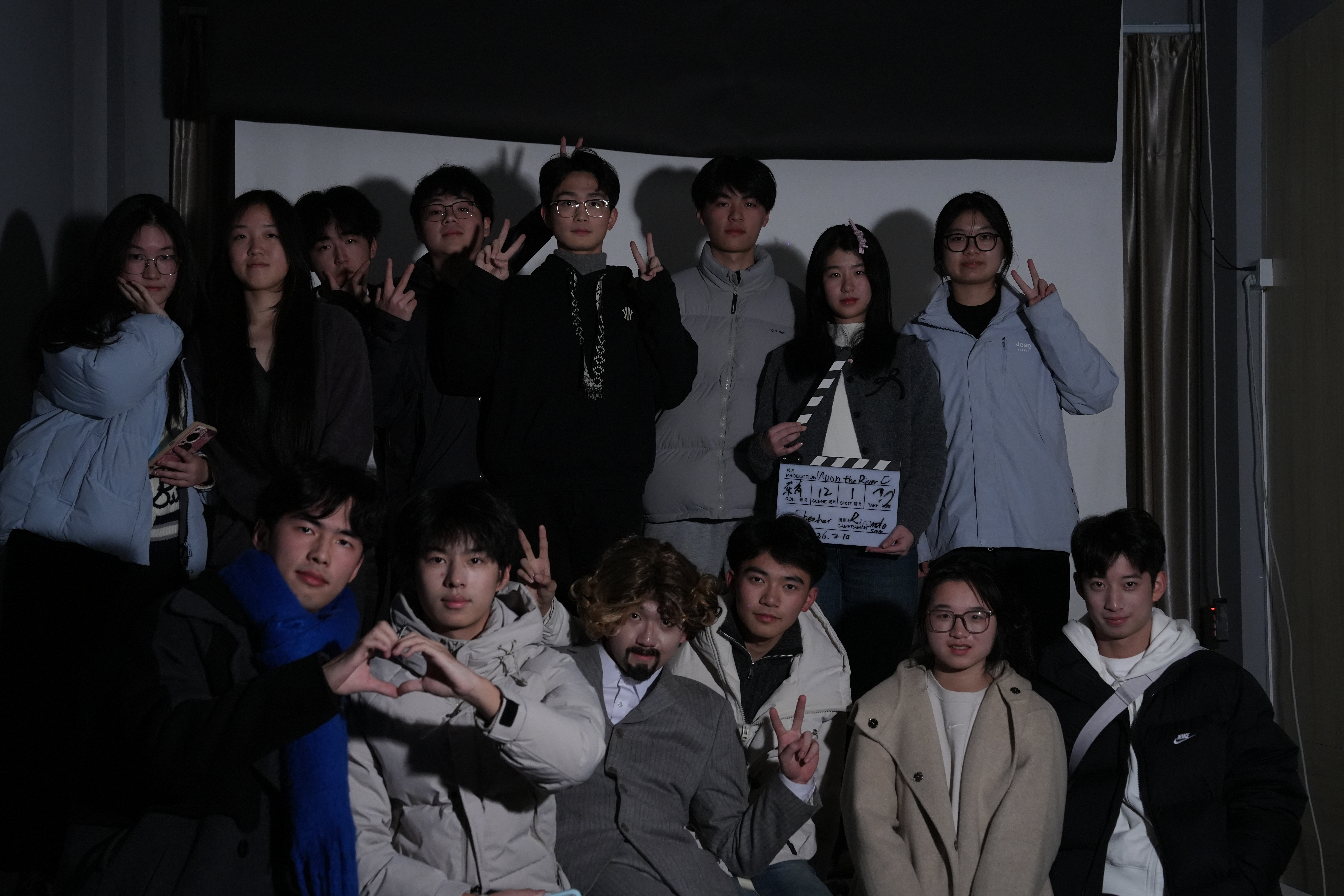
Upon the River O, 2026
Synopsis
Upon the River O unfolds inside a makeshift theatre known as the “Strange Actors Factory,” where a group of students rehearse a musical built from different moments in the history of the Ou River region.
Three historical figures occupy the stage: an Ancient Yue man who remains on his homeland after the forced migration of his people, a Song-dynasty woman searching for her absent husband, and a British colonial visitor attempting to learn Nanxi opera. Around them sit two contemporary figures: Li Chang, an ordinary young man who records the rehearsal while drifting between attention and boredom, and the Paper Man, a silent figure who appears to exist outside the historical structures represented onstage.
As the rehearsal continues across alternating days and nights, the characters clash, overlap and interrupt one another. Music becomes unstable, historical identities collide, and the distinction between performance and reality gradually begins to dissolve.
Eventually, the Paper Man is drawn into the action itself. Li Chang leaves the theatre, and the Paper Man follows. Their departure leads away from the stage and toward the Ou River.
The film does not attempt to resolve whether escape from historical or social structures is possible. Instead, it leaves its characters suspended between performance, history and the present.
Director’s note
Upon the River O began in September 2025 and was filmed in February 2026.
The earliest idea emerged after I read my friend Qiushui’s Night Tour of the Ou River, although the final film developed in a substantially different direction. He Li later became the principal screenwriter, while ChatGPT and I assisted in the writing process. My own role was primarily that of director and producer.
The film gradually became an exploration of the relationship between individuals and the structures that shape them.
The Ancient Yue man, the Song woman and the British man belong to different historical systems. None of them is designed simply as a hero, victim or villain. Their behaviour is inseparable from the historical conditions that produced them.
The contemporary characters, Li Chang and the Paper Man, extend this question into the present.
Li Chang appears ordinary precisely because his behaviour resembles our own. He watches, loses interest, returns to his phone and responds more strongly to immediate sensory stimulation than to difficult or uncomfortable ideas.
The Paper Man appears, at first, to occupy a different position. Blank, anonymous and able to manipulate the theatrical environment, the figure seems almost untouched by history. Yet once the rehearsal begins to collapse, even the Paper Man is pulled into the structures unfolding onstage.
I did not want the film to offer a clear answer to the question of whether an individual can exist outside social and historical structures.
The departure of Li Chang and the Paper Man is therefore not presented as liberation. It is simply movement away from one space and toward another.
Formally, I was interested in theatre as a way of approaching history.
Rather than reconstructing the past realistically, the film presents students attempting to perform it. Costumes, musical instruments, improvised scenery and visible theatrical devices remain deliberately present. History is therefore always mediated through contemporary performers.
The “Strange Actors Factory” also has a personal origin.
When I was a child, after watching films, I would return to the old apartment where I lived and perform stories by myself, acting as director, performer and audience at the same time. The artificial theatre constructed for Upon the River O is therefore not only a conceptual device. It also returns, in a transformed way, to one of my earliest relationships with performance.
I prefer to leave the film open rather than define the meaning of every image or character.
Its starting point may be theoretical, but I do not believe the audience should be required to arrive at the same interpretation as the filmmakers.
Director’s statement
Upon the River O began with a question that had stayed with me for several years: how much of an individual can truly exist outside the structures that shape them?
When I was younger, I believed strongly in the possibility of independent and divergent thinking. Over time, however, I began to question that assumption. Our thoughts, habits, desires and even our understanding of what appears “normal” are formed within social and historical conditions that precede us.
I wanted to explore this problem through film rather than attempt to answer it theoretically.
The Ou River became the geographical and historical centre of the project. Different civilisations have existed around the same river, each producing its own systems of belief, hierarchy and everyday life. I became interested in placing individuals from these different historical moments within the same artificial space.
The film therefore does not attempt a realistic reconstruction of history. Instead, history is performed by contemporary students inside a makeshift theatre.
This was important to me.
We are incapable of entering the past without bringing the present with us. Every attempt to represent history is already an interpretation made from another time. By allowing contemporary performers, improvised scenery, visible instruments and the instability of rehearsal to remain present, I wanted the film to acknowledge that distance rather than conceal it.
I also wanted to resist simple moral judgement.
The Ancient Yue man, the Song woman and the British man are not designed as representatives of good and evil. They occupy positions created by different historical structures. Even when their behaviour appears oppressive, irrational or passive from a contemporary perspective, I am more interested in asking what produced that behaviour than in deciding whether the individual deserves praise or condemnation.
Li Chang and the Paper Man bring the same question into the present.
We tend to recognise historical systems of control more easily than those in which we currently live. Li Chang appears “normal” precisely because his habits resemble ours: distraction, boredom and a preference for immediate stimulation. The Paper Man initially appears blank, anonymous and therefore free, but gradually discovers that even apparent emptiness cannot remain untouched by structure.
Their departure at the end is deliberately unresolved.
Leaving a structure does not necessarily mean escaping it.
I do not believe the film provides an answer to the questions it raises. Nor do I want it to.
For me, cinema becomes most interesting when it creates a space in which filmmaker and audience can encounter a problem together without being forced toward the same conclusion.
Concept
The central concept of Upon the River O is the relationship between the individual and the historical, cultural and social structures that shape human existence.
The film places five figures inside one theatrical environment.
Three belong to the past:
The Ancient Yue man exists within an early natural and political order. He remains on the land after his community has been displaced, suspended between attachment to nature and abandonment by history.
The Song woman belongs to a Confucian social order shaped by hierarchy, gender roles and family obligation. Her search for her husband is not merely a personal narrative but also reflects the social position from which she is permitted to understand herself.
The British man enters the film through the logic of nineteenth-century imperial expansion. His confidence, aggression and curiosity toward local culture are inseparable from the colonial structure that gives him authority.
The film deliberately avoids establishing a simple hierarchy among these three characters.
Their relationships operate more like a system of mutual pressure than a conventional conflict between protagonist and antagonist. Each character is constrained by one structure while simultaneously exerting pressure on another.
The other two figures belong to the present.
Li Chang is intentionally ordinary. His name, behaviour and position as both cameraman and spectator make him a contemporary point of identification. He moves between attention and distraction, engagement and boredom.
The Paper Man is more abstract.
Covered in blank sheets of paper, the figure initially appears to possess no fixed identity and no historical inscription. It moves between stage and backstage, manipulating artificial suns and moons and appearing to stand outside the drama.
The central question is whether such a position is actually possible.
As the performance develops, the Paper Man is gradually drawn into the conflicts it has been observing. What appeared to exist outside the system becomes another object within it.
The theatrical form is essential to this concept.
Most of the film takes place during the rehearsal of a musical inside the “Strange Actors Factory,” a temporary theatre constructed from an ordinary interior. The audience watches contemporary students attempting to embody history rather than historical characters existing within an illusion of realism.
The visible artificiality of the stage creates a distance between representation and history.
Music functions in a similar way.
The flute, guzheng, snare drum and keyboard are not intended to produce polished musical performance. Their hesitant and sometimes unstable sound belongs to the film’s rehearsal quality. Imperfection becomes part of the form rather than something that must be concealed.
The structure of the film also avoids a conventional dramatic arc. It moves largely through repetition, accumulation and gradual disruption, reflecting my sense of history as something that usually unfolds slowly but is occasionally interrupted by concentrated moments of rupture.
By the final scene, the theatrical framework begins to weaken.
The historical figures remain, but the sense that they are merely performing history becomes less secure. Rather than resolving the film, the ending allows history to continue speaking after the contemporary observers have left.
STILLS
03 images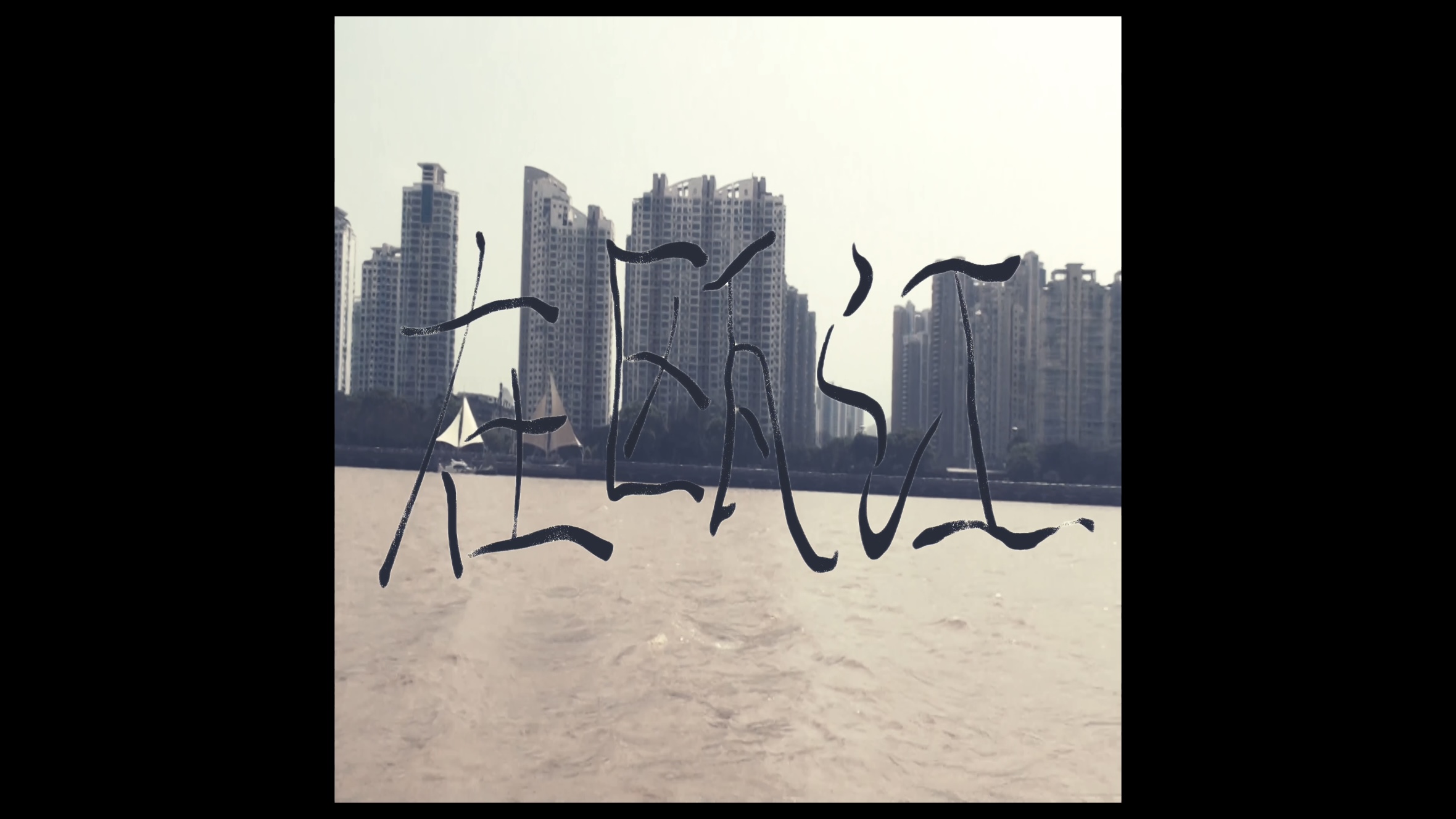
The Subtitle
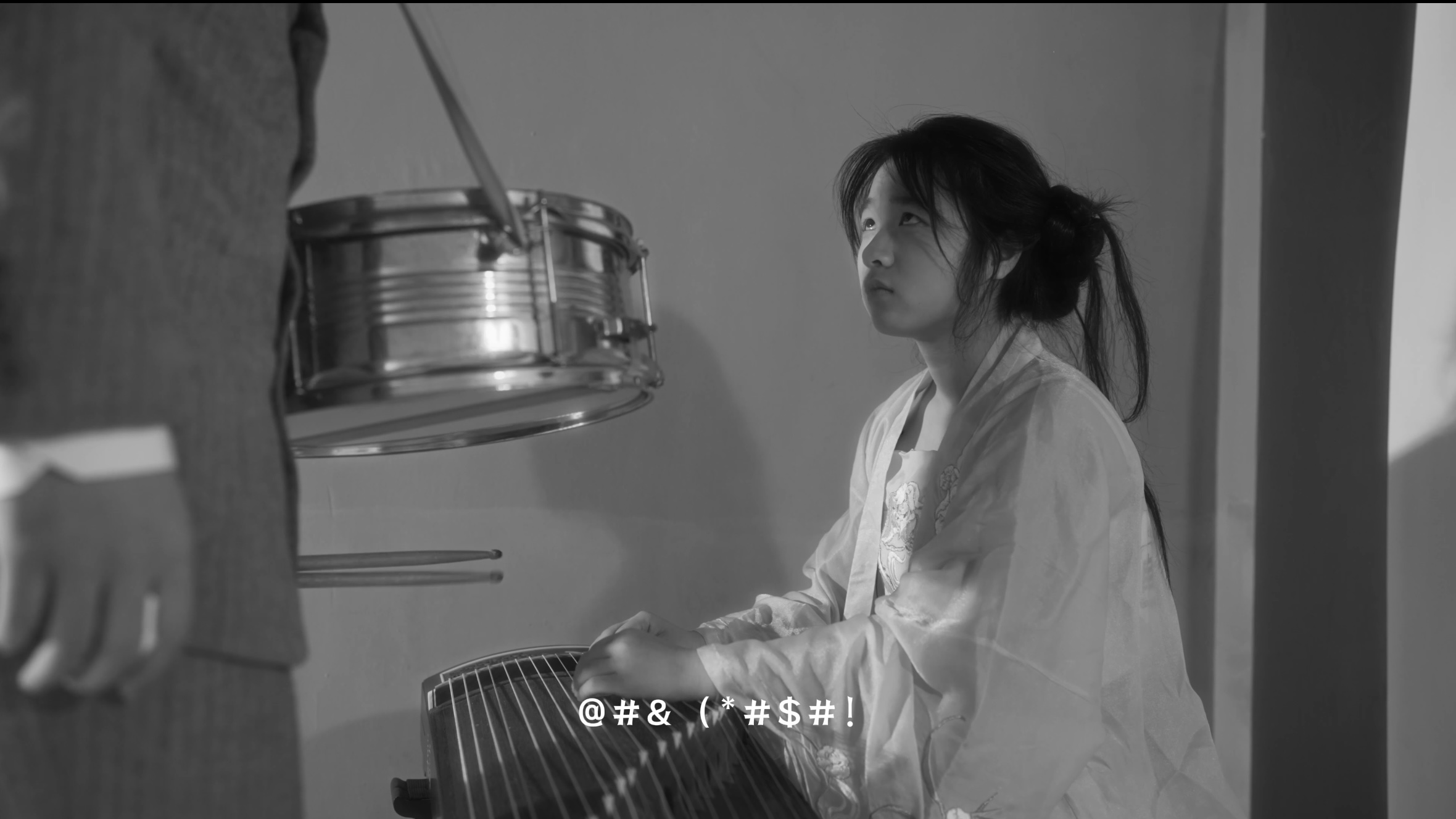
The Conflict Between the British and the Song People
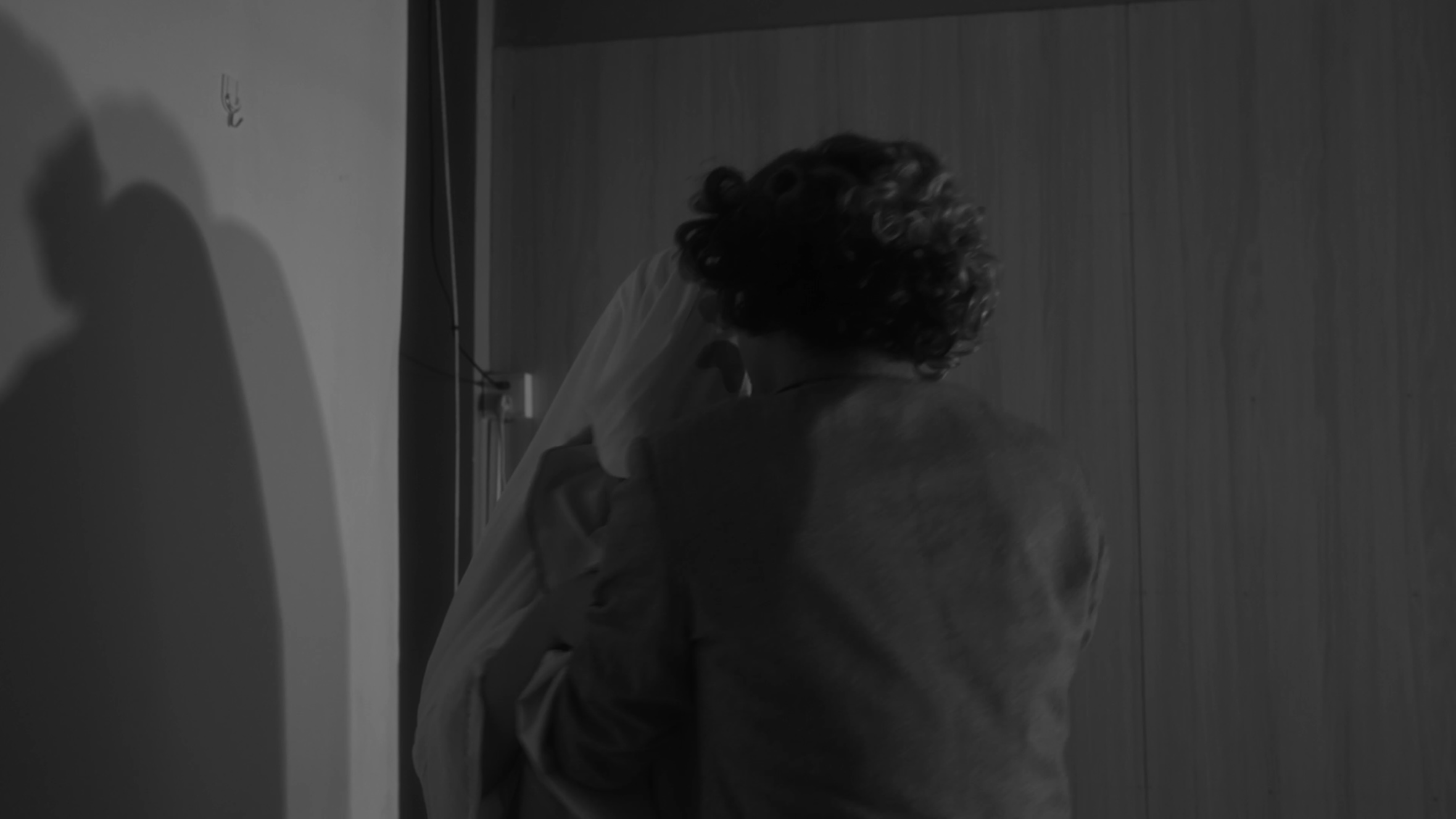
The Conflict Between the British and the Paper
Production notes
Upon the River O was the largest production I had directed at that point.
The crew consisted of approximately twenty people, including five principal performers. Although the project was associated with my school film club, only two participants came directly through the club. Most of the team consisted of friends I already knew, as well as people introduced by them.
Principal photography took place over three days in February 2026.
For the first time, I had enough production time to work with a degree of calm. Previous projects had often forced me to prioritise completion over refinement. On this film, although the schedule was still demanding, I was finally able to rehearse, adjust and make decisions without constantly feeling that the production was about to collapse.
The main theatre scenes were shot in a studio at my former primary school, which I borrowed from my former photography teacher. He also provided part of the lighting equipment.
The location was transformed into the “Strange Actors Factory.” During the rehearsal day, the cast and crew worked together to construct the space, using fabric, chairs, instruments and improvised scenic elements to create a deliberately artificial theatre.
The Ou River sequences were filmed separately. We first visited the river on the evening of 8 February, and I later returned alone during the Qingming period to capture additional material.
This was also my most technically equipped production at the time.
We used two Sony A7 IV cameras: one equipped with a standard zoom lens and another with a fast prime lens. Camera movement was supported by a DJI RS3 gimbal. Sound was recorded with RØDE microphones, and lighting was provided primarily by Godox fixtures.
Pre-production was considerably more formal than on my previous films. We prepared storyboards, blocking plans and shot lists. Costumes and props were designed by me. Musical preparation also began in advance.
The guzheng and keyboard performers already knew their instruments. The actor playing the Ancient Yue man received basic flute instruction from another student, while the drum required less technical preparation.
Several scenes changed during production in response to the space, performances and practical conditions. Storyboards and blocking remained useful references, but once again I learned that a plan cannot fully predict the reality of a set.
Overall, however, the production proceeded smoothly.
For the first time, the difficulty of filmmaking came less from basic survival and more from managing a larger creative system.
The final film runs approximately eleven minutes.
It was later submitted to the FIRST International Film Festival as a way of placing the work into a broader film context and testing how it might function outside our immediate circle. It was not selected, but the result did not substantially affect how I viewed the project.
Production process
Development of Upon the River O began around September 2025.
The earliest impulse came after I read my friend Qiushui’s Night Tour of the Ou River. Although the final film has little direct connection to that text, it encouraged me to begin thinking about the Ou River as a space in which different historical layers could coexist.
As the project developed, He Li joined the writing process and became the principal screenwriter. I worked alongside him, with assistance from ChatGPT, while remaining primarily responsible for directing and producing the film.
Compared with my previous projects, pre-production was considerably more structured.
We prepared storyboards, shot lists and blocking plans. I designed the costumes and props, while the performers rehearsed both their dramatic actions and the musical elements required by their roles.
The guzheng and keyboard performers already had experience with their instruments. The actor playing the Ancient Yue man received basic flute instruction from another student. The deliberately imperfect quality of the musical performance eventually became consistent with the rehearsal-based aesthetic of the film.
The production involved approximately twenty people, including five principal performers.
Although the project was connected to my school film club, the crew developed through a broader personal network. Only two participants came directly through the club; most were friends I already knew or people introduced by them.
Before principal photography, the cast and crew spent a rehearsal day constructing the theatrical environment together.
The main location was a photography studio at my former primary school, borrowed from my former photography teacher. Some lighting equipment was also provided through him.
Transforming that studio into the “Strange Actors Factory” became an important part of the process.
Rather than hiding the limited nature of the space, we built the set around its artificiality. Fabric became stage scenery, mismatched chairs became an audience area, and musical instruments, cameras and everyday objects remained visible within the frame.
Principal photography took place over three days in February 2026.
This was the most fully equipped production I had made at that point.
We used two Sony A7 IV cameras: one with a standard zoom lens and the other with a fast prime lens. Camera movement was supported by a DJI RS3 gimbal. RØDE microphones were used for sound recording, while Godox fixtures formed the main lighting setup.
For the first time, I felt that I had enough equipment, crew and shooting time to work with relative calm.
The schedule was still demanding, but unlike my previous films, we were not simply racing to obtain enough footage to finish the project. I was able to make adjustments, repeat material and respond to the actual space.
At the same time, the shoot reinforced something I had already begun to learn: storyboards and blocking plans are frameworks rather than instructions.
Several scenes changed once we encountered the performers, architecture, lighting and practical conditions of the location. Instead of treating those deviations as failures, I increasingly learned to make decisions dynamically while protecting the larger structure of the film.
The Ou River material was produced separately from the studio shoot.
The crew first filmed by the river on the evening of 8 February. During the Qingming period, I later returned alone to capture additional footage.
The completed film runs approximately eleven minutes.
After post-production, I submitted it to the FIRST International Film Festival. I did not approach the submission with the expectation that the film would necessarily be selected. For me, it was primarily a way of placing the work into a professional film context and seeing how it might exist beyond the group that had produced it.
The film was not selected, but that result did not substantially change my relationship with the project.
The more significant achievement was the production itself.
For the first time, I had coordinated a comparatively large crew, a multi-day schedule, rehearsals, location access, set construction, costumes, props, musical preparation, camera departments, lighting and sound within a single project.
Upon the River O therefore became an important transition in my filmmaking practice.
It was not simply a larger film.
It was the first production in which I began to understand how a director’s ideas depend on the ability to build and sustain an entire working environment around them.
Reflection
Upon the River O was the largest production I had directed at that point.
The crew consisted of approximately twenty people, including five principal performers. Although the project was associated with my school film club, only two participants came directly through the club. Most of the team consisted of friends I already knew, as well as people introduced by them.
Principal photography took place over three days in February 2026.
For the first time, I had enough production time to work with a degree of calm. Previous projects had often forced me to prioritise completion over refinement. On this film, although the schedule was still demanding, I was finally able to rehearse, adjust and make decisions without constantly feeling that the production was about to collapse.
The main theatre scenes were shot in a studio at my former primary school, which I borrowed from my former photography teacher. He also provided part of the lighting equipment.
The location was transformed into the “Strange Actors Factory.” During the rehearsal day, the cast and crew worked together to construct the space, using fabric, chairs, instruments and improvised scenic elements to create a deliberately artificial theatre.
The Ou River sequences were filmed separately. We first visited the river on the evening of 8 February, and I later returned alone during the Qingming period to capture additional material.
This was also my most technically equipped production at the time.
We used two Sony A7 IV cameras: one equipped with a standard zoom lens and another with a fast prime lens. Camera movement was supported by a DJI RS3 gimbal. Sound was recorded with RØDE microphones, and lighting was provided primarily by Godox fixtures.
Pre-production was considerably more formal than on my previous films. We prepared storyboards, blocking plans and shot lists. Costumes and props were designed by me. Musical preparation also began in advance.
The guzheng and keyboard performers already knew their instruments. The actor playing the Ancient Yue man received basic flute instruction from another student, while the drum required less technical preparation.
Several scenes changed during production in response to the space, performances and practical conditions. Storyboards and blocking remained useful references, but once again I learned that a plan cannot fully predict the reality of a set.
Overall, however, the production proceeded smoothly.
For the first time, the difficulty of filmmaking came less from basic survival and more from managing a larger creative system.
The final film runs approximately eleven minutes.
It was later submitted to the FIRST International Film Festival as a way of placing the work into a broader film context and testing how it might function outside our immediate circle. It was not selected, but the result did not substantially affect how I viewed the project.
What I learned
The clearest lesson I took from Upon the River O was not that I had become a dramatically better director.
It was that I had become a much better producer.
For the first time, I had to manage a relatively large group of people, coordinate performers and crew, organise equipment, borrow locations, prepare props and costumes, arrange rehearsals, construct a set, manage multiple shooting days and respond to changes without losing control of the production.
That experience changed my understanding of producing.
A producer is not simply the person who arranges practical matters around the director.
Production determines what kind of creative freedom is possible on set.
Because the preparation was stronger and the crew was larger, I finally had enough time and resources to direct with relative calm. The three-day schedule was still limited, but compared with my previous projects, I was no longer simply trying to survive the day.
I also learned that larger resources do not automatically solve artistic problems.
We had better cameras, more lenses, professional sound equipment, lighting, a larger crew and more preparation than before. Yet the questions I had after finishing the film were no longer mainly technical.
They were about writing, structure, authorship and conceptual clarity.
That distinction became important to me.
Technical limitations can prevent an idea from being realised, but removing those limitations does not guarantee that the idea itself is strong.
Finally, the project changed the way I think about collaboration.
Working with a principal screenwriter allowed the film to become larger and more complex, but it also made me more aware of the relationship between collaboration and authorship.
I do not think authorship requires one person to do everything.
But I learned that I need to understand which creative decisions I am willing to delegate and which ones I need to remain deeply involved in.
After Upon the River O, I felt more confident that I could build and manage a film production.
My next challenge was no longer simply to make larger films.
It was to make more precise ones.